
Thought
My Biggest Design Obstacle in 2026 Was My Own Ego
How I stopped fighting the change and started becoming a next-generation designer.
I have been a designer for more than 20 years.
That sentence carries experience, but it also carries weight.
When you spend that long building a craft, you become proud of it. You remember the years it took to train your eyes, develop your taste, defend your decisions and learn that moving something by a few pixels can genuinely change how it feels.
You also become protective.
Protective of the process. Protective of the title. Protective of the idea that the work has value because you know how difficult it is to produce.
Then LLMs and generative AI arrived and started doing parts of that work in seconds.
My biggest obstacle as a designer in 2026 was not learning how to use AI.
It was overcoming my own ego.
The uncomfortable question
At first, I looked at AI as something surrounding the craft, not something that should enter it.
It could help with research. It could correct some writing. It could generate ideas when I was stuck. But the real work? The design thinking, the systems, the interfaces and the creative decisions? That part still belonged to the designer.
Or maybe that was what I wanted to believe.
There was an uncomfortable question sitting behind my resistance:
If a machine can generate the screen, write the copy, suggest the journey and produce the code, what exactly is left for me?
I do not think experienced designers always admit this. It is easier to criticise AI for producing generic work, making mistakes or lacking taste. All of that can be true. AI produces plenty of bad work.
But sometimes our criticism is also hiding something else.
Pride.
We spent years learning how to do something, and suddenly the value of knowing how to manually produce it started changing. It felt as if the shortcut was disrespecting the road we had taken.
I had to decide whether I wanted to defend that road or continue moving forward.
My craft was not the tool
The shift happened when I started separating my craft from the tools I used to practise it.
My value was never only in drawing a screen. It was in knowing why the screen should exist, what problem it should solve, what should happen before it and what could go wrong afterward.
It was in seeing the inconsistency that others missed. Understanding behaviour. Connecting customer experience with business needs, technology, accessibility, quality and delivery. Knowing when something looked polished but still did not work.
AI did not remove those abilities.
It exposed how important they really were.
An LLM can give me ten ideas quickly. My experience helps me recognise the one worth developing.
It can generate an interface. My judgment tells me whether that interface respects the user, the brand, the journey, the design system and the reality of implementation.
It can produce code. That does not automatically mean the product is useful, usable or even worth building.
The machine can produce. The designer still has to understand, direct, judge and take responsibility.
Once I understood that, AI stopped feeling like an attack on my craft. It became a way to extend it.
I stopped asking AI for answers
For me, the real change did not happen when I started writing better prompts.
It happened when I stopped treating AI like a search box and started treating it like part of my working environment.
I began using LLMs across my everyday work. To explore ideas, structure products, challenge customer journeys, write and rewrite content, inspect details, think through technical decisions, test assumptions and move from a thought to something I could actually use.
I did not want AI only to tell me how an app could work. I wanted to build the app.
That is how projects such as maatabo started moving beyond documents and static designs. I could think through the product architecture, define user journeys, build working experiences, test them, refine them and then turn the stable decisions into a system.
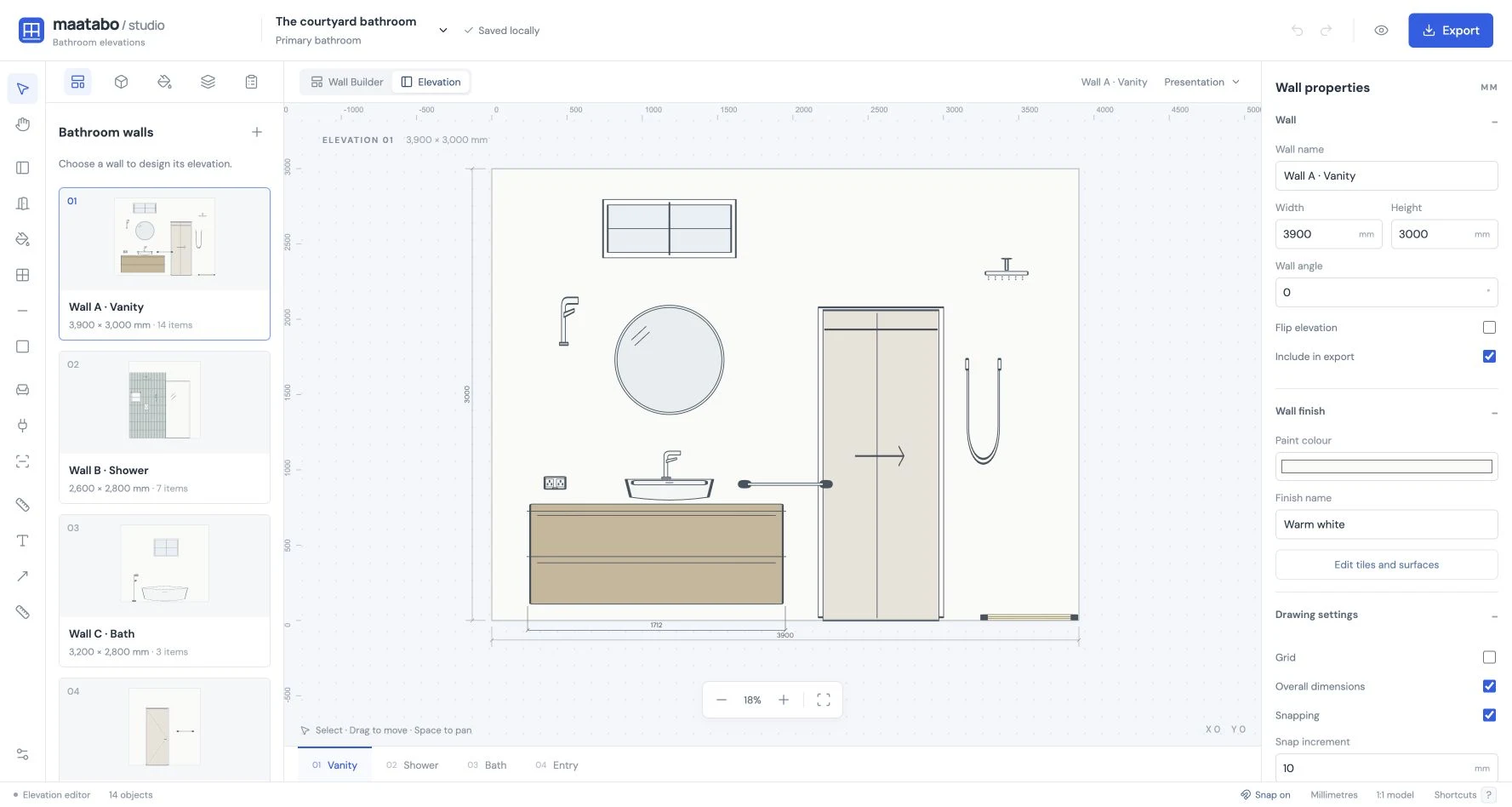
A working planning tool, connecting spatial decisions, dimensions and details.
I built websites. I created applications. I developed a full native Figma design system with an LLM and connected it to a dynamic, GenUI-ready way of working. I started building systems that could support generated interfaces without allowing every generated result to become random.
The design system became more than a library of buttons and colours. It became a set of rules that both people and AI could understand.
Components, behaviours, tokens, content patterns, accessibility, responsiveness and RTL support were no longer documentation sitting on the side. They became the boundaries within which interfaces could be generated and still feel like one product.
That changed my role.
I was no longer designing every screen as an isolated final answer. I was designing the logic, standards and decisions that could create many correct answers.
From designing screens to designing capability
Traditional design workflows often end with a design file.
The designer researches, sketches, creates screens, builds a prototype and hands it over. Then the design begins a long journey through product, development and QA, usually changing along the way.
My workflow started becoming different.
I could build something, test it, approve the behaviour, systemise what worked and then push that learning back into Figma. The working product could become the behavioural source of truth, while the design system captured and governed the decisions.
Build. Test. Approve. Systemise. Improve.
This was not about abandoning Figma or ignoring design discipline. It was about removing the artificial wall between imagining something and making it real.
I could go further than producing how a product should look. I could explore how it behaves, what data it needs, what happens in an error state and whether the idea still makes sense when it becomes functional.
For a designer, that is a major shift.
The output is no longer only a screen.
The output can be a working product, a reusable system, a specialised AI agent, a governed GenUI framework or an entire capability that continues producing value after the first design is finished.
I did not become a developer, researcher, copywriter or product architect overnight. I became a designer who could move into those conversations and work across them without waiting for every thought to be translated by someone else.
That is what becoming a next-generation designer started to mean to me.
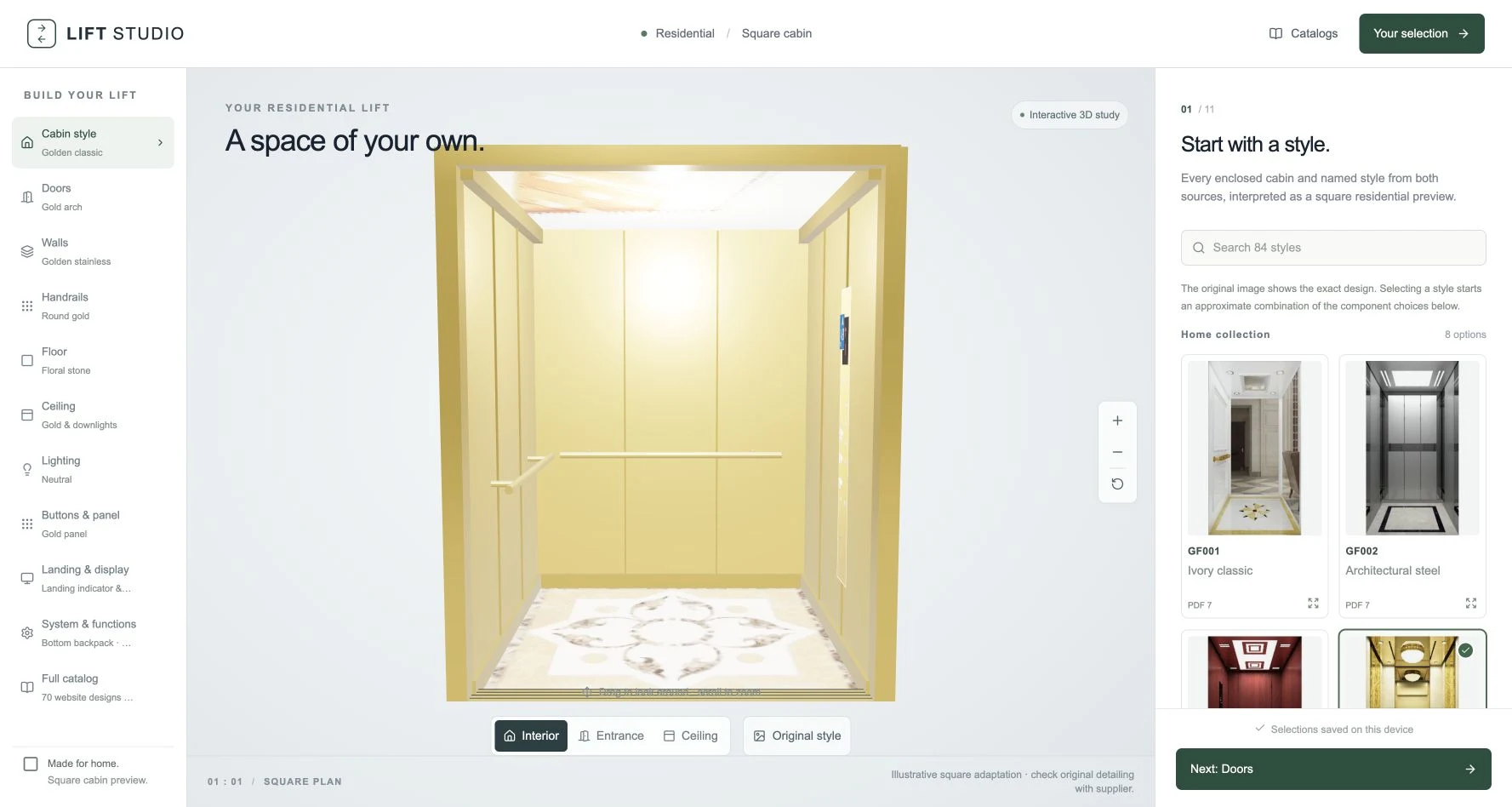
From a static idea to an interactive experience. Materials, components and a cabin preview in one place.
Speed was not the biggest gain
Yes, AI made me faster.
But speed is the least interesting part of this change.
The real gain was range.
Ideas that would once have remained in my notes could become prototypes. Prototypes could become working applications. Repeated decisions could become systems. Questions outside my original speciality no longer had to stop the entire process.
I could move across strategy, experience, interface, content and implementation while keeping the original thought connected.
That does not mean the work became effortless.
AI still misunderstands. It produces confident nonsense. It can create something technically correct and visually empty. It repeats patterns. It forgets constraints. It sometimes needs more management than a human team member.
I reject a lot of what it gives me.
But that rejection is also part of the work. The quality does not come from accepting the first generated answer. It comes from knowing what to ask for, recognising what is wrong, improving the direction and refusing to lower the standard just because the result arrived quickly.
AI did not make taste less important.
It made taste the filter through which far more possibilities could pass.
I did not want a generational gap
I also had to be honest with myself about the future.
The next generation of designers will not approach AI with the same emotional baggage. They will not see it as something that entered design later. For them, it will simply be part of design.
They will generate, build, test and change direction without separating those activities into different professional identities. They will expect interfaces to adapt. They will design systems for people and machines. They may find it strange that we once spent days manually producing variations that could be created in seconds.
My experience gives me an advantage, but only if I allow it to move forward with me.
Twenty years of experience can become an engine, or it can become an anchor.
If I protect the old process simply because I mastered it, I may remain experienced while becoming less relevant. I could eventually find myself speaking about craft in a language the next generation no longer uses.
I do not want that gap.
I do not want to stand outside the change, judging it, while younger designers build the future without me. I want to bring everything I learned about people, brands, systems, quality and experience into the tools and products that will shape what comes next.
Joining the change does not mean pretending I am a younger designer. It means refusing to let my previous success decide the limits of my future work.
What I actually had to let go
I did not have to let go of quality.
I did not have to let go of taste, detail, originality or responsibility.
I had to let go of the belief that the work was more authentic when I personally performed every step.
I had to stop measuring value by effort and start measuring it by what I could make possible.
That was difficult because designers often build part of their identity around execution. We want to point at the final result and say, “I made that.”
Now, “I made that” can mean something wider.
It can mean I created the direction, built the system, trained the agent, defined the constraints, challenged the output, connected the parts and made sure the result deserved to exist.
The authorship is still there. It has simply moved to a higher level.
The next-generation designer
I do not believe the next-generation designer is someone who knows how to type prompts faster than everyone else.
It is someone who combines human judgment with machine capability.
Someone who understands experience deeply enough to direct generation instead of being impressed by it. Someone who can design the interface and the system behind the interface. Someone who can move from an idea to a working product while keeping the details, standards and people connected.
They do not worship AI, and they do not fight it.
They use it.
They know when to trust it, when to challenge it and when to ignore it completely.
In 2026, I did not throw away the designer I had spent more than 20 years becoming.
I stopped worshipping the process through which I had become him.
That may be the biggest design decision I made all year.
My biggest obstacle was not AI.
It was my ego.